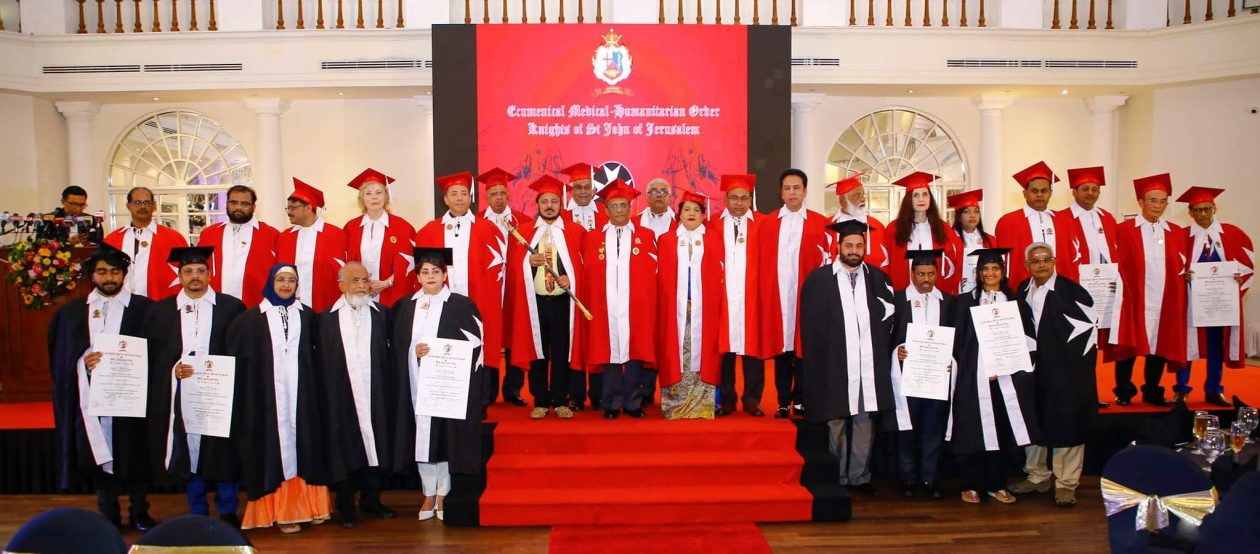
Aims, Objects and Virtues
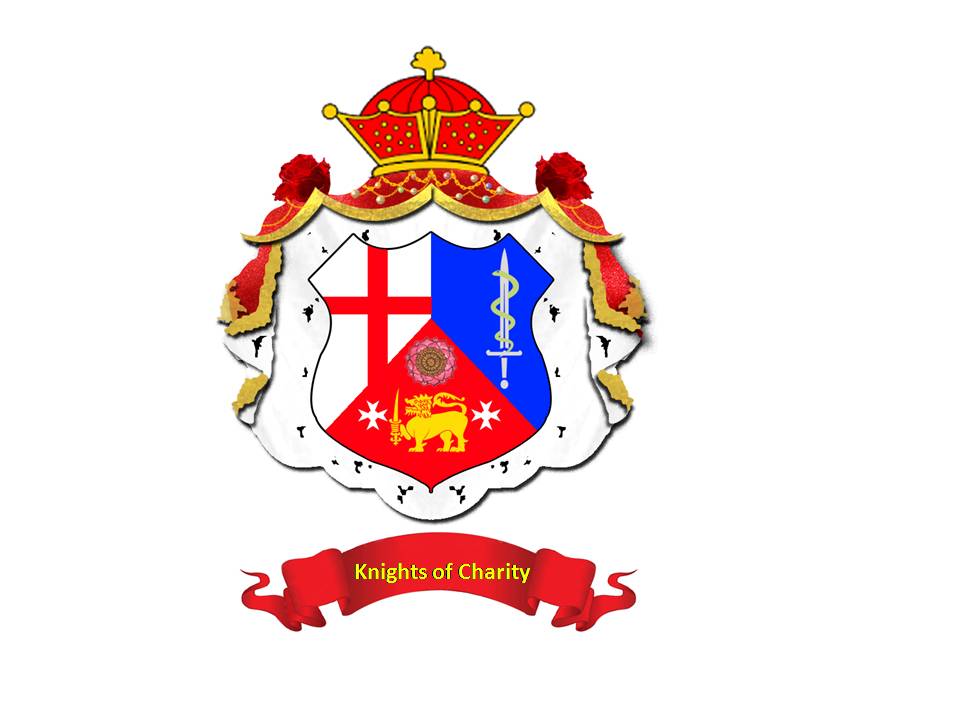
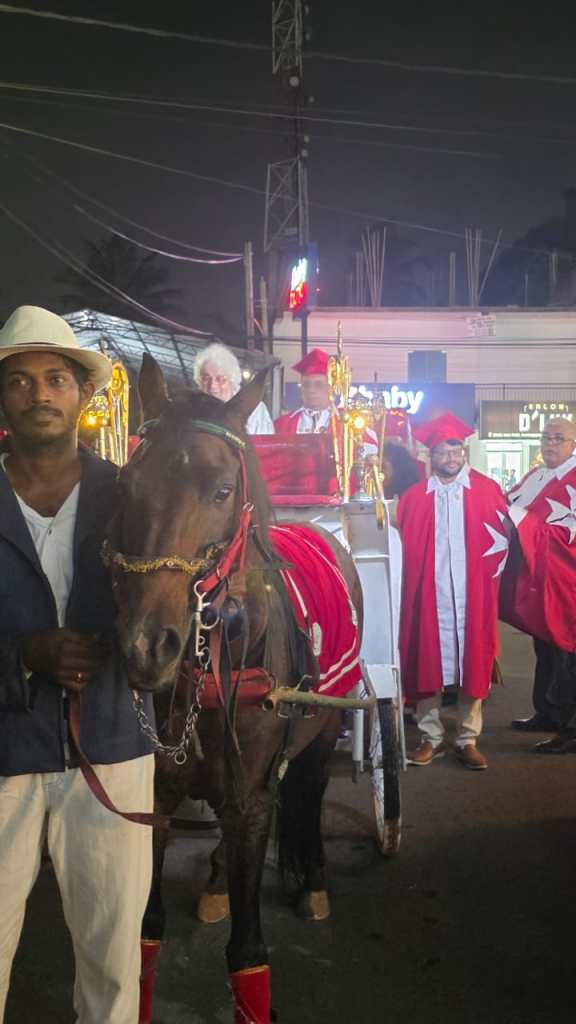
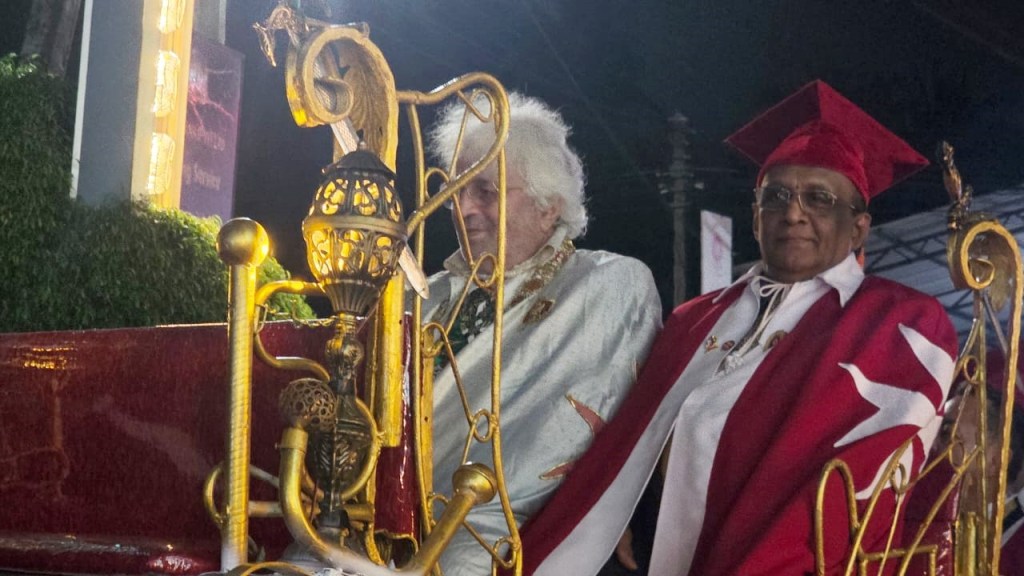
Unitas in Caritate et Sanitate (Unity in Charity and Health)
A legitimate pioneering global interfaith chivalric Order based on the Knights’ Charter from the Order of Saint John of Jerusalem, constituted under the 1963 Royal Charter of H M King Peter 11 of Yugoslavia, and registered in the Prime Minister’s office of Malta in 1964. Related Orders.
The ICOC’s 1960s Registers applied strict criteria from the 1963 Joint Declaration of the International Alliance of Orders of St. John, validating dynastic orders like the King Peter Order if they retained fons honorum from a recognised sovereign house. King Peter II (reigning 1934–1945, exiled post-WWII) qualified as an ex-sovereign, making the 1963 Charter a valid basis for the Order’s chivalric continuity.
As the pioneering global interfaith chivalric order, the Ecumenical Medical Humanitarian Order of St. John of Jerusalem (EMH Order) stands at the forefront of a transformative legacy, uniquely blending ancient chivalric traditions with modern humanitarian imperatives. We proudly embrace knights and dames from diverse faiths—including Orthodox Christians, secular humanists, and believers of all creeds—in a brotherhood dedicated to unity, compassion, and service.
SAVING HUMANITY
sózontas tin anthropótita Σώζοντας την ανθρωπότητα
Human weakness of divisiveness has been exploited to bring about our own demise: socially, economically, politically, racially, medically, and theologically, and we are drifting ignorantly toward the extinction of human civilisation. EMH Knights, while focusing on SDG 3 and 16, will help humanity survive existential risks and possible misuse of increasingly powerful technologies, including genetic engineering, nanotechnology and AI to prevent the Singularity.
A New Dawn in Chivalric Evolution
Where Tsar Paul I of Russia once dreamed of transforming the ancient Knights Hospitaller into a global, inclusive brotherhood beyond Catholic exclusivity—embracing Orthodox and secular nobles alike—the Ecumenical Royal Medical-Humanitarian Order Knights of St. John of Jerusalem (EMH Knights of Charity) now realises that vision in the 21st century. With UN ECOSOC Consultative Status, diplomatic passports issued through Brussels missions, and a historic parliamentary incorporation via Deha Dhamma in Sri Lanka, the EMH Order stands as the first truly global, interfaith chivalric institution—uniting East and West, science and spirit, under a single banner of humanitarian service. This is not revival, but renaissance: a sovereign-free, UN-recognized, legally empowered Order of Charity, open to all who pledge to heal, protect, and uplift humanity. The dawn Paul I foresaw has risen
Knights of Charity and Medicina with branches in over 100 countries, would be the vehicle that drives these changes globally to bring about peace, harmony, and social change by uniting hearts and fostering closer understanding and dialogue among nations. The Fifth Industrial Revolution incorporates concepts such as “sustainability,” “human-centeredness,” and “concern for the environment”.
The Ecumenical Royal Medical-Humanitarian Order of the Knights of St. John of Jerusalem (Knights of Charity) was formally constituted in March 1993 under a charter issued by Grand Master Kelinu Vella Haber, successor to the historic Order of St. John of Jerusalem under 1963 Royal Charter of H M King Peter 11 of Yugoslavia.
The Ecumenical Royal Medical-Humanitarian Order Knights of St. John of Jerusalem (EMH Knights of Charity) draws enduring legitimacy from the 1963 Royal Charter and 1964 Constitution granted by His Majesty King Peter II of Yugoslavia, the last reigning monarch of the Karadjordjević dynasty and direct descendant of Tsar Paul I. Recognized by the International Commission for Orders of Chivalry (ICOC) as one of the six legitimate continuations of the ancient Knights Hospitaller, Peter II’s charter—issued in unbroken fons honorum—established an ecumenical, globally inclusive Order dedicated to humanitarian service. This royal endorsement, rooted in the Russian tradition of 1798, empowers EMH to confer authentic knighthoods, uphold sacred vows of charity and healing, and operate as a modern sovereign-free chivalric institution—now fortified by UN ECOSOC Consultative Status, parliamentary incorporation via Deha Dhamma, and diplomatic credentials, fulfilling Peter II’s vision of a united, compassionate brotherhood for the 21st century.
On 24 November 1964, just 13 months after King Peter II issued the 1963 Royal Charter and 8 months after the 1964 Constitution took effect, Chev. Kelinu Vella Haber O.S.J. formally registered the Malta Office of the Sovereign Order of St. John of Jerusalem with the Office of the Prime Minister of Malta (National Archives File OPM-1964-1276/1964). This official act—recorded in the Maltese government’s archival system—proves beyond doubt that Vella Haber was fully aware of and operating under the authority of Peter II’s newly granted fons honorum. By filing in Malta, the historic seat of the original Hospitallers (1530–1798), Vella Haber positioned his priory as a legitimate continuation of the ecumenical, Russian-dynastic tradition revived by Peter II—open to all Christians and dedicated to humanitarian service. This 1964 registration serves as a foundational legal anchor for the EMH Knights of Charity, directly linking our 1993 charter to the only ecumenical Order of St. John recognised by the International Commission for Orders of Chivalry (ICOC) as one of the six authentic successors to the 1099 Knights Hospitaller.
This charter, while invoking the Order’s medieval legacy, innovatively adapts its mission to contemporary global and regional priorities, most notably through a strategic partnership with the Deha Dhamma (Divine Body Care) Centre in Sri Lanka—established by Act of Parliament No. 25 of 1992. This collaboration integrates the chivalric tradition of humanitarian service with Sri Lanka’s ancient medical and philosophical heritage, tracing a continuous lineage from King Buddhadasa (398 CE)—author of the Sarartha Sangrahaya and a pioneer of surgical and holistic care—to the legendary King Ravana, revered in regional tradition as a master pharmacologist and architect of a self-sufficient, non-violent society. The Deha Dhamma Centre’s statutory mandate—to promote the protection, rehabilitation, and education of physically and mentally challenged individuals; to conduct rigorous research into indigenous herbal therapies; and to foster self-sufficiency in health, wealth, food, and clothing—directly advances United Nations Sustainable Development Goals 3 (Good Health and Well-Being) and 16 (Peace, Justice and Strong Institutions). Thus, the Knights of Charity do not merely preserve a medieval institution; they recontextualise chivalric ethos as a living instrument of cultural revival, ecumenical cooperation, and sustainable development, bridging Eastern wisdom traditions with Western humanitarian frameworks to build a more equitable and harmonious global society.
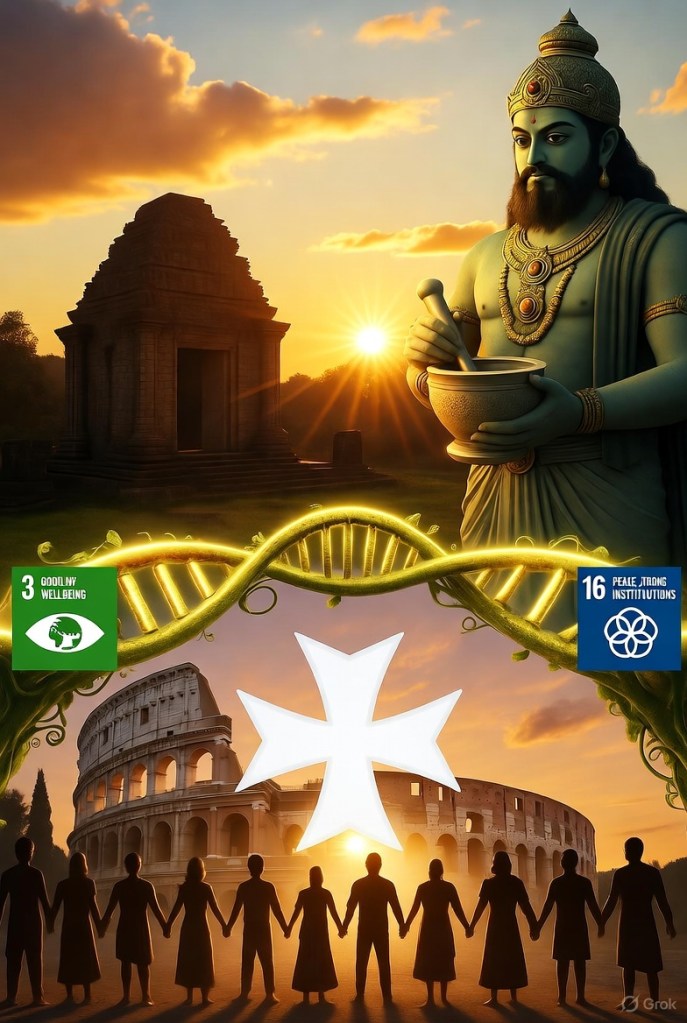
The Aims and Objects of the Order
While many worthy causes exist in our society today for our Knights, Medicina Alternativa perhaps provides for Society’s greatest needs, challenges and rewards.
- To establish, equip, staff and maintain free treatment centres under Medicina Alternativa with branches in over 100 countries
- To promote and participate in all phases of education of physicians, nursing staff, and paramedical and nutritional care personnel under Medicina and OIUCM.
- To raise funds for all these preventive and curative needs.
- To promote peace and prosperity by patience, civility, cooperation and consensus and not by confrontation.
- To promote knowledge and dispel ignorance.
- To alleviate poverty.
- To promote fellowship among the Knights and Dames in order to structure a better Society.
- To bring about social change by uniting hearts and fostering closer understanding and dialogue among nations.
Knights of Charity are expected to maintain high standards of conduct and self-discipline in their dealings with fellow men. Their qualities of honesty, kindness, love, patience, joy, forgiveness, respect & courtesy , diplomacy, peace and humility should be an example for others in society.
Knights should refrain from questionable conduct and fraudulent deals such as money laundering, and dealing with drugs that bring disgrace to the fraternity and if there are complaints of such conduct, after due inquiry, they may risk their names being struck off the register and defrocked.
CODE OF CHIVALRY OF KNIGHTS OF CHARITY
- To protect the weak and defenceless
- To refrain from the wanton giving of offence
- To live by honour and for glory
- To despise pecuniary reward
- To fight for the welfare of all
- To obey those placed in authority
- To guard the honour of fellow knights
- To eschew unfairness, meanness and deceit
- At all times, speak the truth and remain humble
- To persevere to the end in any enterprise begun
- To respect the honour of women
- Never refuse a challenge from an equal
- Never turn your back upon a foe
- Please click to watch video
VIRTUES EXPECTED OF THE KNIGHTS OF CHARITY
- Charity
- Justice
- Honesty
- Sagacity
- Prudence
- Temperance
- Courage
- Obedience
- Truth
- Virtue
- Mercy
- Diligence
- Hope
- Valour
- Please click to watch video
| All Knights are bound by this oath: I promise to know follow and observe faithfully the Constitution of the Order. I promise to support and defend, by word and deed, the prestige of the Order to which I am honoured to belong, to be faithful to the noble traditions of the Order. I promise to remain always faithful and obedient to the Grand Master, and, through him, also to the other Dignitaries of the Order in all matters regarding the Order and its discipline. I promise to be always mindful of the noble purposes which the Order has set forth. I promise to live an exemplary life worthy of the knights and dames of the order in the observance of the Code. I promise to participate in the service to the Order, to be observant of all assumed commitments and to fulfil all the obligations and duties inherent to my Knight Status. I promise to observe and respect with exemplarity the precepts of my Religion. I promise to observe and respect with exemplarity the laws of my Country. I promise to be helpful in all works of Charity toward my fellow men, according to the means at my disposal. |
| OATH TO BE TAKEN AT THE INVESTITURE CEREMONY |
Essential Leadership Skills Expected of Knights as They Engage in Global Projects of the Order
Leaders Serve. In the Information Age, everyone everywhere is potentially in a relationship with you (whether you choose it or not). A service mentality is not just an ethical plus—it’s required.
Cultivate Courage. Courage and sacrifice remain the foundation of leadership and service. The higher levels of service—and sacrifice—are the binding elements of effective leadership in all times and places.
Vision Remains the Foundation. Casting a vision remains an indispensable element of leadership.
Aim to be the Best in the World. That’s right: in the world. Mediocrity is lethal. Best in the world is the only sustainable business model. In our digital age, people can seek out the best value from anywhere in the world.
Listen and Observe. Listening is a master skill in a relationship-based world. An ideal is to learn to listen and observe with the focus of an actor, a writer, a painter. Merely hearing is as far from listening as conversing at a coffee table is from presenting a speech to thousands.
Ask Questions. Refrain from Answers. The open ends of question marks invite engagement. The closed ends of periods are the equivalent of the body language of defensively crossed arms. Declarations fit naturally into transactions. Questions are the building blocks of relationships.
Master the Arts and Science of Influence. Internal and external stakeholders have greater leverage than ever before. The age of the boss is over. “The power to persuade” is now as necessary a skillset for corporate CEOs as politicians.
Recognise that Communication is Part of Everything You do. Communication skills cannot be delegated or outsourced. You are your message. From new media to traditional meetings, leaders must master an ever-evolving range of communications expectations.
Cultivate an Experimenter’s Mindset. Innovation includes false leads and failures. Today’s failure may be the basis of tomorrow’s breakthrough.
Break Boundaries Wherever They Appear. Don’t let others’ limitations of imagination or experience or customs or organizational culture limit your capacity to serve.
Demand Optimism. Optimism—or negativity—can spread from a leader through her ranks faster than ever. Whether to be publicly optimistic is a leadership decision, not simply a matter of one’s individual temperament or druthers.
Safeguard Your Physical, Mental, and Spiritual Health. Your health constitutes the foundation of all your service. Not to maintain your physical health—especially as you become older—is to succumb to self-indulgence. Seen in this way, safeguarding your health is a moral duty of the highest order.
Achieve Integrity. The sum of your parts can be united into a whole that only you can create. Therein lies your calling.
The Annual Obligation of Members
Members of the Order who are inscribed in the Roll of Honour are required to make an annual obligation to their Order on the last day of January each and every year to contribute to its administration and charitable good works. An amount as determined by the Priory Council, each year, to be used for the expenses of the Grand Priory. A percentage of the priory obligation will be passed to the Chancellery for other charitable works at a rate determined annually.
Other than so stated, no member of the Order should be asked for monies at any time, except such as they may wish to donate either in their lifetime or in their Last Will and Testament for the charities of the Order.
The Discipline of the Members
The Grand Magistry Council may expel from the Order any member who fails to honour his obligations thereto, or who is in breach of his or her oath of loyalty and obedience.
The Grand Master may instruct the Grand Chancellor to convene a Court of Honour and to commence the process against any offending member. The accused will be invited to appear and address the Grand Magistry Council. The Grand Magistry Council’s decision shall be rendered by majority vote but the Grand Master may overrule the majority in rendering his decision.
The Court of Honour, which is not a permanent Organ of the Order, consists of the Grand Magistry Council as a whole, with a President of the Court appointed by the Grand Chancellor, together with a prosecutor and defender, both of whom are also named by the Grand Chancellor.
As soon as disciplinary proceedings are commenced, the accused is suspended from his functions and from his rank. This suspension remains in force until the definitive sentence of the Court is issued by the President of the Court or his deputy. The sentence requires approval by the Grand Master, who will sign and approve it within seven days of its delivery. Thereupon, the Court will communicate its decision to the accused through the statutory Organ of territorial jurisdiction.
 Territorial Command of Grand Priory of The EMH Order Knights of St John of Jerusalem